

A SafePay attack results in the encryption of critical data and a ransom demand instructing victims to make a “safe payment” - usually in Bitcoin - to restore access and prevent the exposure of stolen information.
A break-in at your offices would compel you to call the police immediately and touch nothing until they arrive, understanding the need for a forensic investigation.
A cyber-attack requires the same action. Your first responsibility would be to call in the forensic experts and ensure the environment remains untouched.
This is not a job for your IT team or MSP. There are Digital Forensic specialists available 24/7 who can assist you.
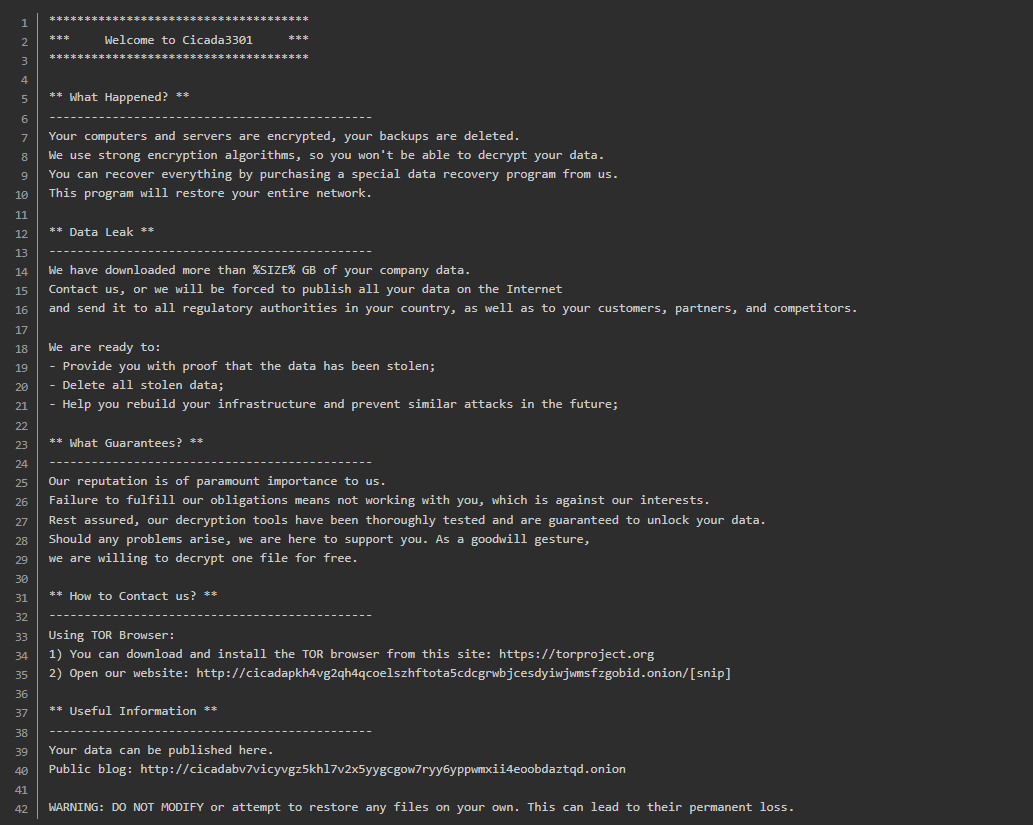
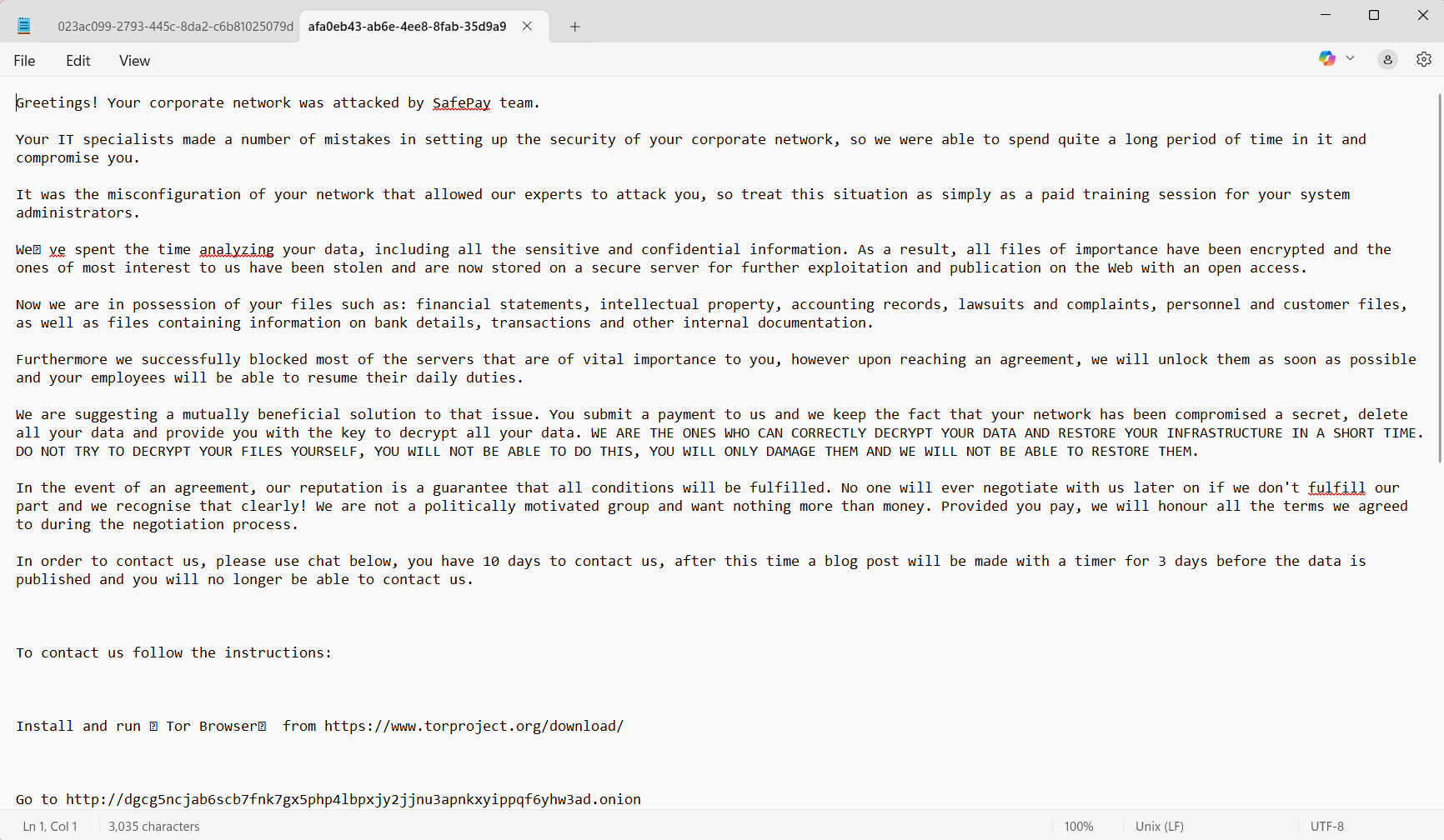

SafePay is a fast-growing ransomware group first seen in late 2024. By early 2025, it became one of the top threats, targeting small businesses and local governments - especially those with weak security. It uses stolen VPN/RDP credentials and known exploits to breach networks, disable backups, and encrypt files using AES-RSA, appending a .safepay extension. Victims then receive a ransom note demanding payment and threatening data leaks.
Operating mainly in the U.S., Germany, and the UK, SafePay runs high-volume, low-complexity attacks, often over 10 per day. It focuses on sectors like healthcare, education, and construction. The group runs active leak sites and uses double extortion, making it a major threat to vulnerable organisations.
Double extortion is a ransomware tactic where attackers both encrypt and steal a victim’s data, then threaten to leak it if the ransom isn’t paid. This method pressures victims to pay even if they have backups, due to risks like reputational harm or legal consequences.
SafePay was first identified in mid-2023 and quickly gained traction among lower-level ransomware operators. Since then, it has been linked to 278 incidents globally.
While not as sophisticated as larger ransomware operations, SafePay’s low barriers to entry and rapid spread make it a persistent threat.
Solace Cyber’s track record includes hundreds of successful response recoveries, providing Digital Forensic Incident Response services, 24x7x365.
“The NCSC handled 430 significant cyber incidents in 2024, a 16% increase from the previous year.”
When a cyber incident occurs, take these immediate actions:
Solace Cyber acts as your specialist digital forensics partner in Australia, helping restore normal operations swiftly. Our response includes:
Recovery timelines typically range from 2 weeks to 2 months, depending on the incident's scope.
Solace Cyber delivers global risk and security services across Australia, specialising in travel, crisis support, and offshore risk management. The organisation runs a fully staffed security operations centre around the clock and maintains an internal intelligence unit that produces routine daily and weekly updates. The business is certified to ISO 27001, ISO 14001, ISO 45001, and ISO 9001 standards.
Founded in the UK in 2021, Solace Cyber has grown its presence throughout Australia, concentrating on cyber incident handling, including digital forensics, incident response, ransomware events, information security, and wider risk management, supported by managed security services. The senior leadership team has more than two decades of combined experience across security and IT.
s
%+
A forensic analysis needs to be meticulous and a clean restore and recovery requires a wealth of experience not normally available in an in-house team who must provide a broader range of IT support skills:


Solace Cyber was established precisely for this scenario. We have a well-defined process for handling cyber-attacks like SafePay, which involves a 6-step approach:
It includes a thorough digital forensic analysis from step 2 where the output becomes a central component of business recovery. This is because understanding the attack is of critical importance:
It is critical that the analysis of digital evidence is carried out to an agreed plan. This will have been designed to provide the best and earliest chance of discovering a root cause, which is essential to inform remediation/eradication and recovery as well as supporting a legal take-down case if this is applicable. A legal take-down means we can assist in the legal enforcement that stops the criminals from publishing the data, thus undermining the ransom notice.
Solace’s Digital Forensic and Incident Response teams maintain consistent communication throughout. Dedicated Incident Managers and technical engineering leads provide updates during the Cyber Incident Response journey, utilising risk registers and working within change management processes, all from triage through to post-incident, delivering successful business recovery.
Solace Cybers' assistance extends beyond recovery. After restoring your business operations, we work collaboratively to ensure your cyber security posture is robust using a threat-informed methodology. This involves leveraging our comprehensive 9-step framework known as the Solace Global - Cyber 9 Step Process.
Yes, SafePay is ransomware that encrypts victims’ data and demands a cryptocurrency payment to restore files and prevent data leaks.
A SafePay ransomware attack generally enters a system in one of the following ways:
To reduce risk in the future:
The average cost of ransomware breaches hover around £500K, while smaller email data breaches typically incur expenses of around £50K. A critical decision emerges between preserving the environment for forensic analysis or opting for swift recovery to minimise business disruption. Delays in identifying and resolving breaches only exacerbate costs.
Cybersecurity insurance claims entail a multifaceted process, encompassing reasonable expenditures for investigation and remediation, alongside coverage for legal, business interruption, criminal liability, employment liability, and ransom policies. While the insurance industry plays a pivotal role in facilitating business recovery, cyber insurance is perceived as volatile within the sector, and many policies require meticulous validation.
Facing genuine pressure, there's a crucial decision to make - one that could rescue your organisation from weeks of operational standstill, reputation damage, and client data loss. Yet, the probability of a favourable outcome remains slim, emphasising the importance of engaging a specialised ransomware incident response team. They are your most viable recourse for navigating a ransomware incident.
The NCSC have documented the deliberations for paying ransomware: https://www.ncsc.gov.uk/ransomware/home
Important Reminder: It is a criminal offense to pay money to people who are subject to financial sanctions. The list of who is subject to financial sanctions is constantly changing.
The latest iteration can be found here: https://www.gov.uk/government/publications/financial-sanctions-consolidated-list-of-targets
Yes. There's a possibility that some of the lost data contains "Personal Data" belonging to your customers. Safeguarding such data is a legal requirement, so it's important to consider notifying the Information Commissioner's Office (ICO) about this incident, as well as your customers. https://ico.org.uk/
Your insurer or legal counsel will provide guidance on the necessary steps and how to proceed in this matter. However, Solace Cyber has experience collaborating with insurers and legal representatives and can offer assistance in managing these relationships during this challenging period.
Your business operations may experience significant disruptions. These could include:
To mitigate these effects, it's crucial to have a comprehensive incident response plan in place, including communication strategies, collaboration with cybersecurity experts, and measures to enhance system resilience and data protection. Additionally, transparency with stakeholders and proactive steps to rebuild trust can help minimize the long-term consequences on your business.
Action Fraud is the UK’s national reporting centre for fraud and cybercrime. Whether you have been scammed, defrauded, or experienced cybercrime in England, Wales, or Northern Ireland, Action Fraud offers a central point of contact for information on fraud and financially motivated cybercrime.
If your systems are showing signs of an SafePay attack, REMAIN CALM.
YOU MUST NOT TOUCH THEM, RESTORE OR OVERWRITE THE DATA (explanation above).
Contact Solace Cyber on +61 (0) 282 786100 or complete our form for a call back from one of our experts.
We will act promptly to reduce your business downtime.

Solace Cyber helps companies across Australia recover from ransomware attacks and data breaches.
Ransomware Recovery
Ransomware Groups
BEC Recovery
About Us
Blog
News
SOLACE CYBER LTD is registered in England & Wales no. 08830710

Solace Cyber
Zensec Ltd,
60 Martin Place,
Sydney,
NSW 2000
Telephone
Please note that calls may be recorded for security and training purposes.

